Salento · Province of Lecce, Italy
Galugnano
a minor history
A gallop from prehistory to the present day, through the winding paths of a small Salento town with ancient roots: prehistoric monuments, Byzantine traces, sixteenth-century buildings and first-rate baroque architecture.
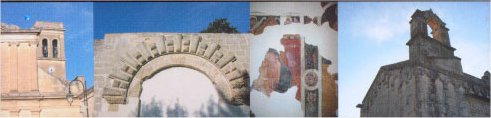
About Galugnano
Galugnano is a cluster of houses clinging to the slopes of a hill in the Salento hinterland, 11 km from Lecce along the road to Maglie. Its origins are lost in time: local historians have linked its founding to the Messapians and, later, to Greek and Byzantine influence — traces that survive in place names, in a few inscriptions, and in the megalithic monuments (menhirs and specchie, dry-stone defensive structures) scattered across the surrounding countryside.
Over the centuries the fief passed through several noble families — the Dell'Acaya, the Spanish Dellanos, the Genoese Levanto and finally the Massa — before being absorbed, in 1866, as a hamlet of the neighbouring town of San Donato di Lecce.
Today Galugnano keeps its historical memory alive: its own dialect, rich in Latin and French-derived words, its civic coat of arms bearing a rooster, and a strong sense of community expressed through its Circolo Cittadino (town club, est. 1971) and its youth association "Noi Giovani".
The book
"Galugnano — una storia minore" ("Galugnano — a minor history") by Franco Michele Dell'Anna, illustrated by architect Luca Dell'Anna, published by Congedo Editore (Galatina). 460 pages, over 200 photographs and drawings, around 60 documents and five years of dedicated research into the town's history, architecture and dialect.
Visiting Galugnano
Guided tours can be arranged, including excursions to the nearby "Grecìa Salentina" area, Otranto, Gallipoli and other typical Salento towns, with optional overnight stays in Lecce (11 km) or Galatina (7 km) and lunch at a local restaurant featuring traditional Galugnano cuisine.
This English section is a short summary. The full site — history, architecture, dialect glossary and more — is currently only available in Italian; an English version of the individual articles is in preparation.