A foundational institution in twentieth-century Galugnano history is certainly the Opera Pia "Beniamino Dell'Anna": named after its founder and benefactor.
His will became the subject of a court case that dragged on from 1925, the year of Dell'Anna's death, to 1930. The dispute pitted his great-nephews against the governing Board of the Opera Pia, in whose favour the case was ultimately decided. The institution's founding and purpose are set out clearly in its statute.
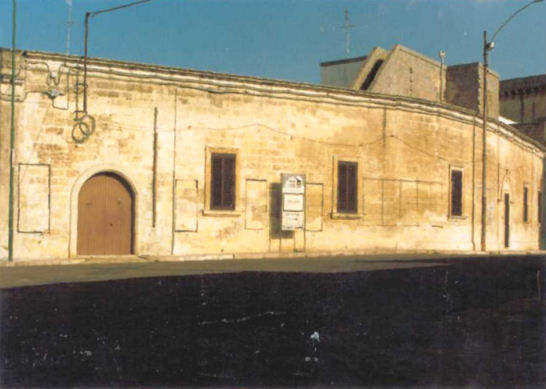
Statute
Note: the statute below is translated for reference. In the event of any discrepancy, the Italian original remains authoritative.
Chapter I
Art. 1 — The "Beniamino Dell'Anna" Retirement Home, founded in 1908 by Mr. B. Dell'Anna and established as a legal charitable body by Royal Decree of 30 June 1927, is a private non-profit institution whose purpose is to provide shelter, maintenance, and educational, religious, moral and material care for elderly people of limited means, of either sex, from the hamlet of Galugnano. The institution's activities are confined to the Puglia region. The poor who have no relatives able or obliged to support them are admitted free of charge; anyone in receipt of a pension must pay into the institution's fund no less than three-quarters of that pension. Where deemed advantageous, a legally recognised nursery school may also be attached.
Art. 2 — The Retirement Home meets its aims through income from its assets and through fees charged to residents or to public bodies and municipalities. It is based in Galugnano, a hamlet of the Comune of San Donato di Lecce, in Piazza Vittorio Emanuele II. Its endowment consists of the movable and immovable property left by the Founder.
Art. 3 — Persons suffering from contagious or mental illness may not be admitted. Within the limits of available places, elderly persons able to pay the full cost of the care they receive may also be admitted.
Art. 4 — Rules for admission and guarantees for payment of fees are set by the Regulations; the level of fees is decided by the Board of Directors.
Art. 5 — In accordance with the Regulations, residents are given the opportunity to carry out light work suited to their physical and mental condition, for the sake of their personal fulfilment and social integration.
Art. 6 — Residents may be discharged for misconduct in the cases and manner set out in the Regulations, which also govern the forms of participation of residents and volunteers in the running of the institution.
Art. 7 — In the event of voluntary departure or discharge of a resident in need of public assistance, the institution and the relevant municipality must be informed.
Chapter II — The Board of Directors
Art. 8 — The Retirement Home is governed by a Board of Directors of five members, including the President (by right the Archbishop of Otranto or a delegate of his): two board members appointed by the Municipal Administration of San Donato from among the citizens of Galugnano, and two appointed by the Archbishop of Otranto to represent the Clergy, Caritas or the Parish Pastoral Council.
Art. 9 — Members must be chosen from among persons of recognised administrative ability and unimpeachable moral standing; anyone with criminal convictions or who has been subject to enforcement proceedings may not serve.
Art. 10 — The President appoints the Secretary at the first meeting. The President and Board members serve five-year terms and may always be reappointed.
Art. 11 — Members who, without justified reason, fail to attend three consecutive meetings are removed from office.
Art. 12 — The offices of President and Board member are unpaid.
Chapter III — Meetings and powers of the Board
Art. 13 — Meetings are ordinary (at least three a year, for the approval of budgets) or extraordinary.
Art. 14 — Notices of meetings must be sent at least five days in advance; in urgent cases, 24 hours' notice is permitted.
Art. 15 — Resolutions require the presence of at least half plus one of the members and an absolute majority of those present; votes on matters concerning individuals are taken by secret ballot.
Art. 16 — Minutes are drawn up by the Secretary and signed by all those present.
Art. 17 — The Board handles ordinary management, approves budgets and final accounts, administers the institution's assets, proposes amendments to the statute, appoints or dismisses staff, and decides on bequests, donations and legacies.
Chapter IV — Powers of the President
Art. 18 — The President represents the Retirement Home, oversees the implementation of the Board's resolutions and, in urgent cases, may for serious cause suspend employees and salaried staff, reporting subsequently to the Board.
Chapter V — General provisions
Art. 19 — Payment orders require the signature of both the President and the Secretary.
Art. 20 — Staffing levels, duties and responsibilities of personnel are set by the internal Regulations.
Art. 21 — Treasury services are entrusted to a Collector appointed by the Board, or to a banking institution with a branch in Galugnano.
Art. 22 — The administrators may make use of the services of Sisters and of a Chaplain.
Chapter VI — Final provisions
Art. 23 (transitional provision) — On the statute's entry into force, the sitting Board ceases its functions until the installation of the new Board, appointed under Art. 8; outgoing administrators remain in office until then.
Art. 24 — For anything not otherwise provided for, Articles 14 et seq. of the Civil Code apply, together with the testamentary provisions of the founder, B. Dell'Anna.